

From Commitment to Action: Designing the Tiger Landscapes Investment Facility
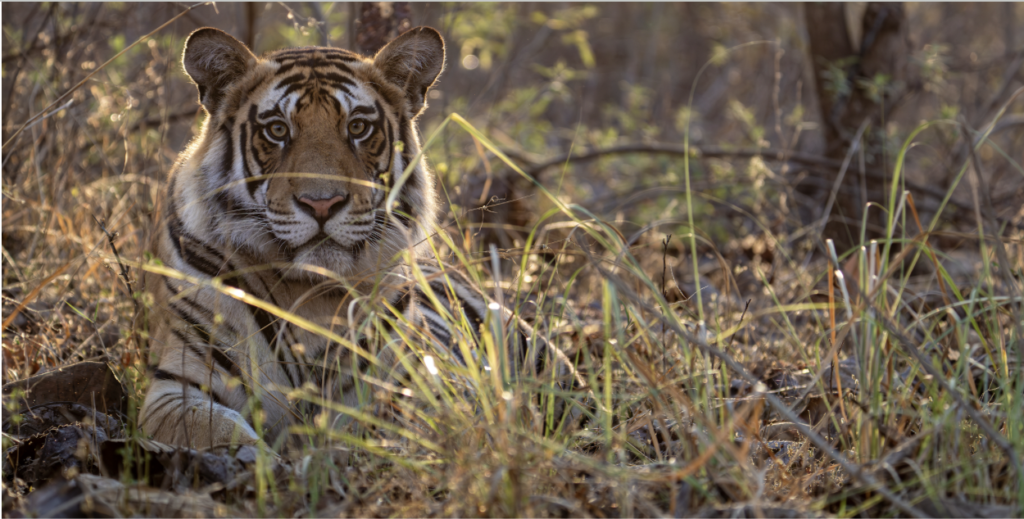
The tiger is a powerful symbol revered across and beyond its range, spanning belief systems, cultures, and generations. It is an apex predator recognized as the ultimate indicator of the health of the ecosystem it inhabits. There are only around 5,500 tigers remaining in the wild, living in large blocks of ecologically connected areas of suitable habitat. These landscapes are highly diverse, ranging from dense rainforests to open grasslands and from snow-covered regions to coastal swamps.
These areas are also home to many human communities that depend on these landscapes for their livelihoods. People rely on forests and natural resources for food, medicines, and tourism, while healthy ecosystems are essential for wildlife to thrive. Supporting both requires sustained investment in local livelihoods and conservation.
The Tiger Landscapes Investment Facility (TLIF) addresses the urgent need to channel private sector investment into businesses that contribute to the conservation of tiger landscapes. It aims to improve access to finance and technical support for local enterprises that can contribute to conservation while strengthening livelihoods.
TLIF was developed in response to the Paro Statement, adopted at the Sustainable Finance for Tiger Landscapes Conference in Bhutan in April 2024. Through the Statement, tiger range countries committed to mobilizing an additional US$1 billion over ten years for tiger conservation and landscape restoration.
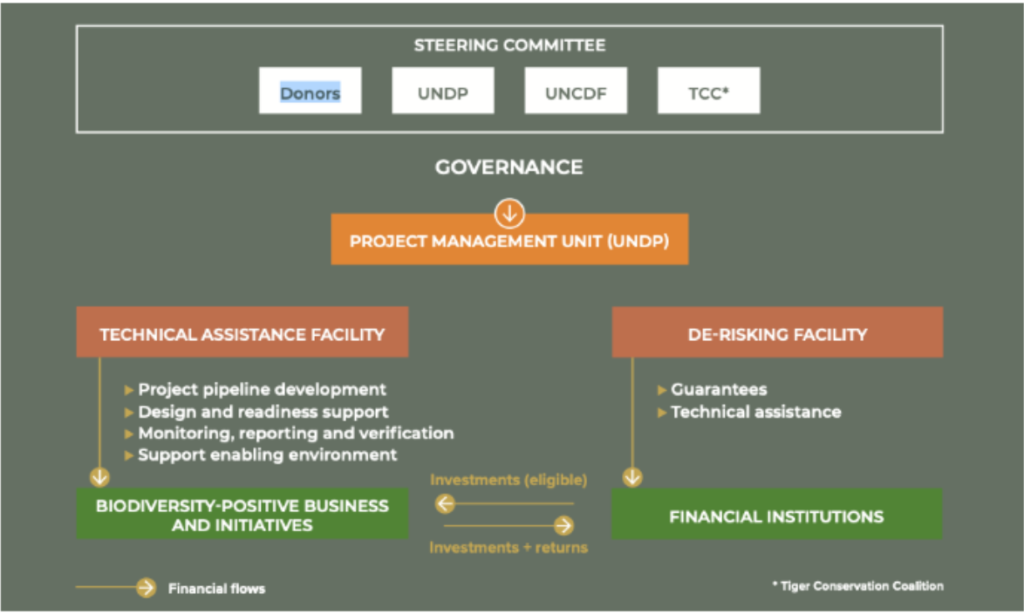
TLIF consists of two facilities. The first is a technical assistance facility that helps develop
appropriate and sustainable tiger landscape biodiversity projects. The second is a de-risking facility aimed at commercial investors to incentivize the financing of the projects.
Now in its pilot phase, TLIF is working with partners in Bhutan, Malaysia, Nepal, and Thailand to develop and demonstrate an approach that reflects national and local circumstances. The pilot aims to demonstrate how technical assistance and financing can support enterprises that benefit biodiversity, communities, and local economies.
The Tiger Landscapes Investment Facility is led by UNDP in partnership with the United Nations Capital Development Fund (UNCDF) and the Tiger Conservation Coalition. More specifically, UNDP leads the overall design of the Facility, ensuring it is fit for purpose and can deliver on its objectives, while UNCDF is responsible for designing and deploying an appropriate de-risking mechanism to attract financing for nature-positive Micro, Small, and Medium Enterprises.
Scoping studies in the four countries found that promising nature-positive enterprises often struggle to access finance and face non-financial challenges. Common barriers include limited business-planning capacity, lack of required collateral, insufficient financial records, weak links with financial institutions, and gaps in environmental and social practices.
In addition, market access, branding, quality standards, and certification requirements remain key non-financial barriers for these enterprises. Tailored technical assistance can help suitable enterprises strengthen their business models and reach investment readiness.
Local knowledge and livelihood priorities are also central to the Facility’s design. Future
interventions will need to consider equitable access to opportunities, gender equality, and the rights and interests of Indigenous Peoples and local communities. Engagement with communities will help identify who may benefit, who may be affected, and how local priorities can inform proposed activities.
Currently, TLIF is at the design and initial implementation stage, so it is too soon to report on implementation impacts. TLIF offers an opportunity to test a unique blended finance approach, identify viable enterprises, establish baselines and indicators, and demonstrate how biodiversity and communities can thrive together.
For more information, visit tigerlandscapes.org