

A Fence for Hope
How a Community in Zimbabwe is Alleviating Human-Elephant Conflict and Saving Their Crops
By Dr. Niall McCann
$300,000. That’s how much the community of Masoka, in Zimbabwe’s Zambezi Valley, loses in income every single year from elephants raiding their crops. And that’s not to mention the lives also lost: Zimbabwe records over 50 human deaths per year from elephant conflict, and in Masoka a 20 year old woman was killed just this February.
Beyond the tragedy of these losses, every crop raid and every death increases community hostility towards wildlife, and drives a wedge between conservationists and the communities who live alongside dangerous wild animals and who bear the costs of this coexistence.
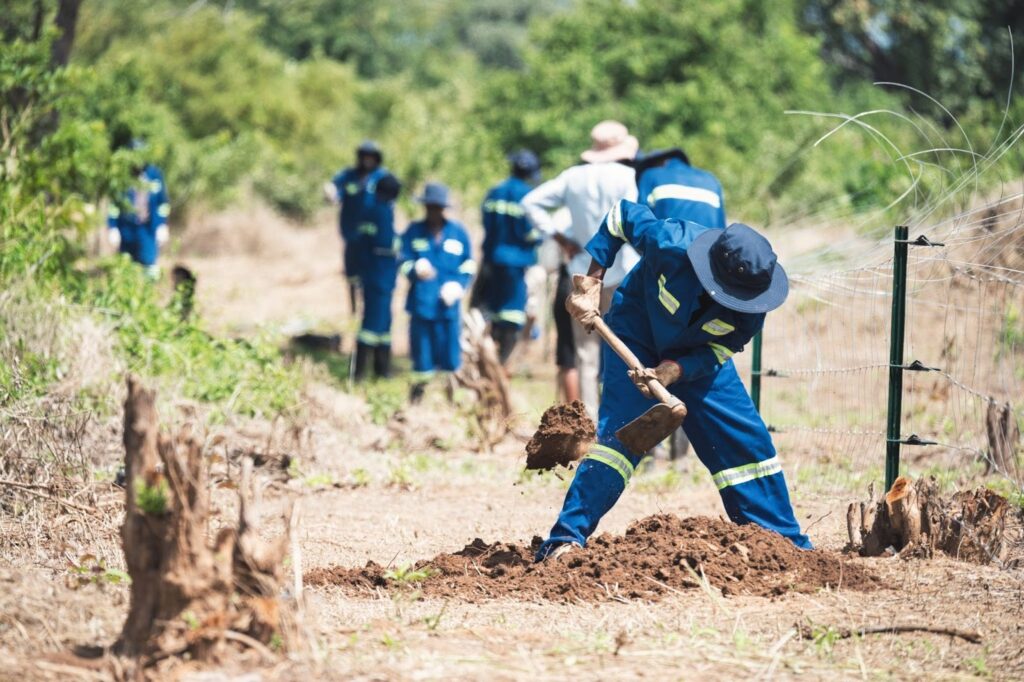
In January 2025 the Awe for Nature Foundation signed a 25 year agreement with the Government of Zimbabwe to co-manage the enormous – 200,000 hectare – Chewore South Safari Area in the Zambezi Valley.
Along with the responsibility to manage this incredible landscape – which boasts the best-preserved dinosaur footprints in Southern Africa in addition to healthy populations of present-day giants such as elephants, buffalo and lions–, comes the responsibility to ensure that the landscape delivers benefits to the communities that surround it.
In our consultation with the community of Masoka, they told us that their number one priority was reducing human-elephant conflict. There are lots of options for how to do this, and I encourage anyone with an interest to look at the Human-Elephant Coexistence Toolbox, curated by Save the Elephants. The community was very clear in their recommendation to us: they wanted a fence.
Elephant fences come in many shapes and sizes. This one needed to be both elephant- and predator-proof, it had to entirely surround the community and their fields, it had to let pedestrians in and out, and have larger gates for vehicles. Importantly, from a wildlife crime perspective, it also had to be made of the kind of material that couldn’t be turned into snare wire, a common issue with any kind of fence in the region.
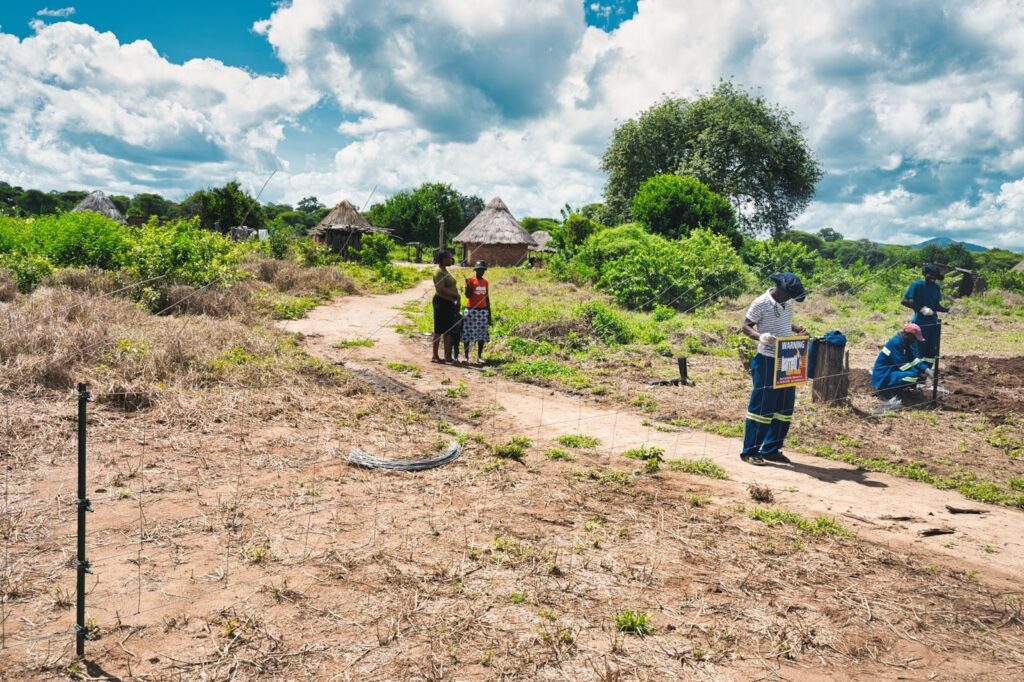
We settled on the ‘porcupine’ design, developed by Space for Giants, which has been trialled in several countries across the continent. The design features shorter fence posts with angled wires reaching out that are harder for the elephants to knock over. We brought in an experienced fencing contractor, and hired local labour to clear a path and erect the 22km fence.
The first stakes went into the ground in March, and within the first week, with only 3km of fence erected, 6 elephant raids had already been repelled.
Our aim is to reduce the community’s losses from $300,000 to $0, to prevent any further losses of livestock to predation, and – most importantly – to prevent any more human deaths from elephant conflict.
None of this will bring back the woman who died in February, but we hope her family and her community will feel the benefit of this fence for many years to come, and that efforts such as this can help us move from conflict to coexistence.
For more information please visit: https://awenature.org/pilot-project/